
There is one wildlife experience near Haridwar that no other safari zone in Uttarakhand can replicate — the sight of a Swamp Deer (Barasingha) herd moving through open wetland grassland at dawn. That experience exists only at Jhilmil Jheel. If you know what Jhilmil offers, you stop treating it as a secondary option and start planning your trip around it.
The Jhilmil Jheel safari is unlike any other safari in Rajaji National Park. It does not take you through dense sal forest looking for tigers. It takes you through Uttarakhand’s last surviving primordial Terai wetland — a 3,783-hectare mosaic of marshy grassland, reed beds, riverine forest, and seasonal waterbodies — where the ecosystem itself is the spectacle and the Barasingha is the star.
Jhilmil Jheel Conservation Reserve was gazetted on August 14, 2005 — a separate legal entity from the main Rajaji National Park tiger reserve. This status reflects something genuine: Jhilmil is a completely different kind of ecosystem, deserving its own protection framework.
Jhilmil Jheel Safari — At a Glance
| Detail | Information |
|---|---|
| Location | Chiriyapur Forest Range, Haridwar–Najibabad Road, Uttarakhand |
| Distance from Haridwar | 20 km (35 minutes by road) |
| Distance from Rishikesh | 38 km (55 minutes by road) |
| Reserve Area | 3,783.5 hectares (9,349 acres) |
| Safari Track Length | 25 km |
| Safari Duration | 2.5 to 3 hours |
| Morning Safari | 7:00 AM – 9:30 AM |
| Evening Safari | 3:00 PM – 5:00 PM |
| Season Open | October 15 – June 30 (longest season in Rajaji) |
| Peak Season (Birds) | November – March (migratory waterfowl peak) |
| Peak Season (Barasingha) | November – April (antlers fully developed) |
| Entry Fee (Indian) | ₹150 per person |
| Entry Fee (Foreign) | ₹600 per person |
| Jeep (Gypsy) Safari | ₹3,000 per vehicle (max 6 persons) |
| Guide Charges | ₹500 per safari (mandatory) |
| Star Wildlife | Swamp Deer (Barasingha), 300+ Birds, Mugger Crocodile, Elephant |
What Makes Jhilmil Jheel Irreplaceable
Three things make Jhilmil Jheel Conservation Reserve completely unique — not just in Rajaji, but in all of Uttarakhand:
1. Uttarakhand’s only Swamp Deer (Barasingha) population. The Barasingha is classified as Vulnerable on the IUCN Red List. Once widespread across the Terai belt, habitat destruction reduced it to isolated pockets. Jhilmil Jheel holds the only surviving population in Uttarakhand. Seeing a Barasingha herd with their spectacular multi-tined antlers in open wetland grassland is one of North India’s most conservation-significant wildlife moments.
2. 300+ bird species — including 120+ migratory winter visitors from Siberia. The wetland draws species from Siberia, Central Asia, and the high Himalayas between November and March. No other Rajaji zone — and very few sites in all of North India — delivers this bird diversity in a single morning safari.
3. Open until June 30 — the longest season of any Rajaji zone. When Chilla, Motichur, Ranipur and all other zones close on June 15, Jhilmil Jheel Conservation Reserve continues until June 30. If you are visiting in late June, Jhilmil is your only option in the entire Rajaji landscape.
The Barasingha (Swamp Deer) — Why Jhilmil Exists
The Barasingha (Cervus duvauceli) — Swamp Deer — is one of India’s most endangered large mammals. Its name comes from its antlers: “bara” (twelve) + “singha” (horns), though mature stags can carry antlers with up to 20 tines.
Barasingha — Conservation Facts
Scientific name: Cervus duvauceli duvauceli (hard-ground Terai race)
IUCN Status: Vulnerable — population declining outside protected areas
Uttarakhand status: Jhilmil Jheel holds the ONLY viable wild population in the state
Best antler season: November–April — stags fully developed, most photogenic
Habitat requirement: Terai wetland + open grassland — very few sites globally
🌿 Seeing a Barasingha stag at Jhilmil means witnessing an endangered species at its only surviving Uttarakhand site — one of North India’s most meaningful wildlife moments.
On a morning Jhilmil safari Barasingha deer visit, you typically see them in the open wetland grassland at dawn — stags grazing on reed and grass margins, hinds and calves moving through taller grassland, and occasionally a full herd of 15–25 animals crossing the open ground in front of your jeep. It is one of the most visually striking wildlife encounters available anywhere near Haridwar.
Wildlife of Jhilmil Jheel — Complete Species Guide
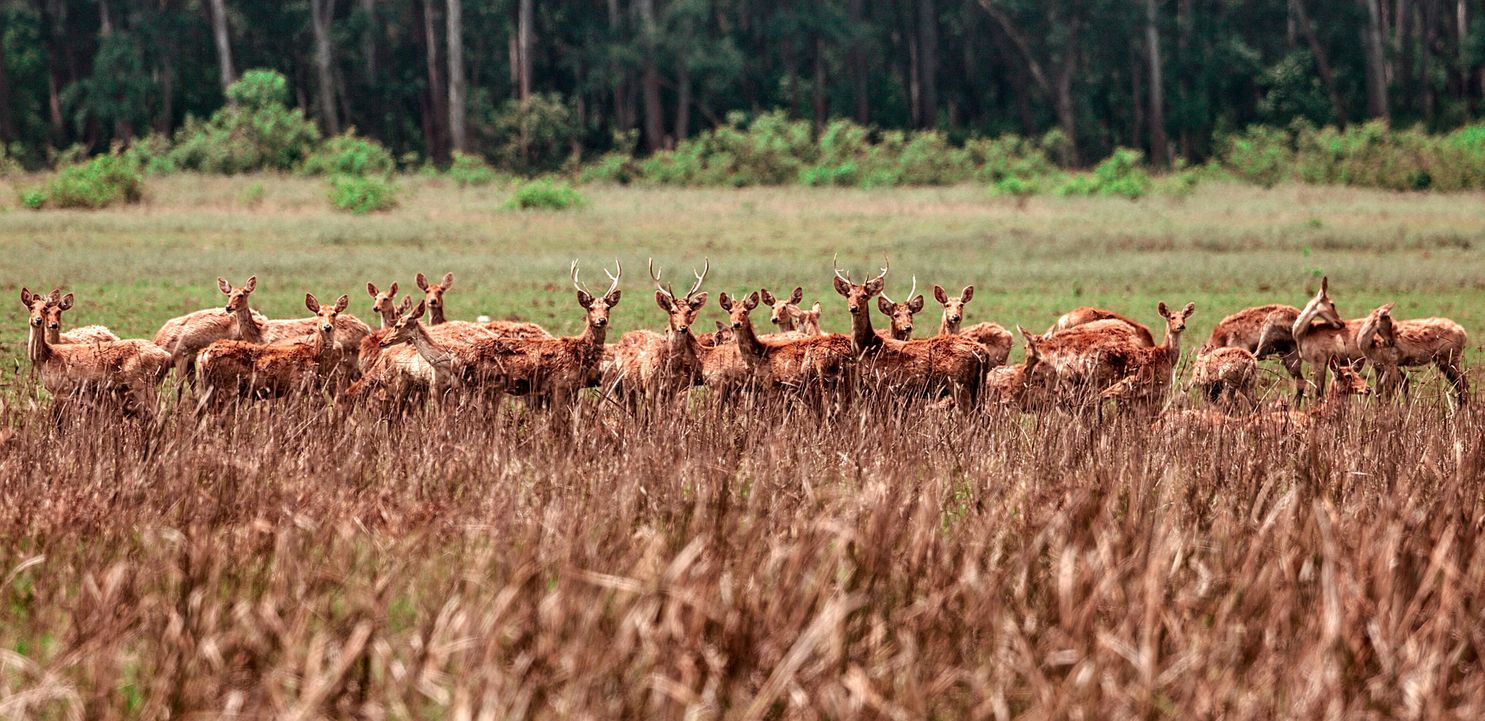
Resident herds of 5–25 animals seen in open wetland grassland every morning. Spectacular antlers November–April. Almost never missed on a morning safari.
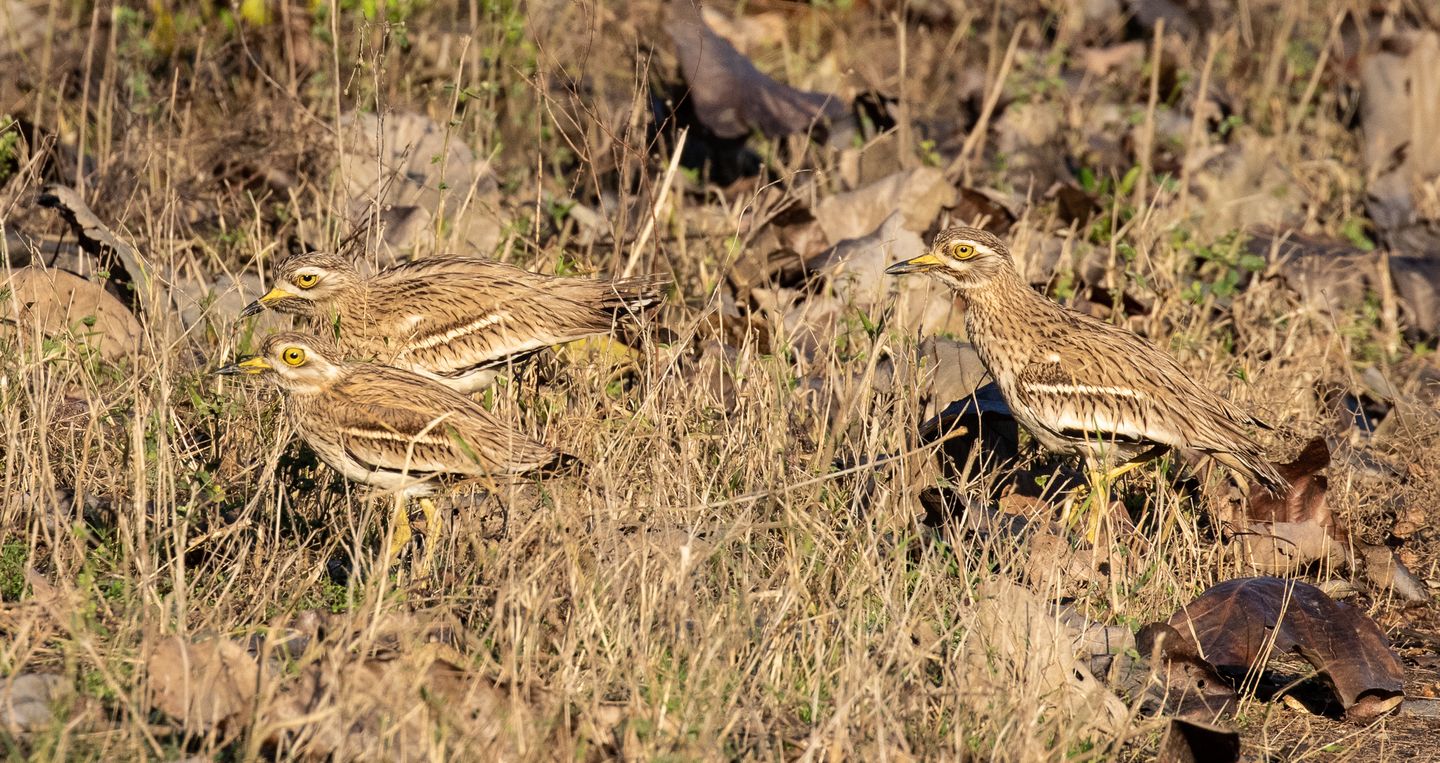
Year-round residents — Great Hornbill, Indian Roller, Crested Serpent Eagle, Kingfishers. November–March: 120+ migratory waterfowl from Siberia and Central Asia.

Mugger Crocodiles bask at the river bank crocodile point inside the reserve. North India’s most reliable accessible crocodile viewing. Best November–March.
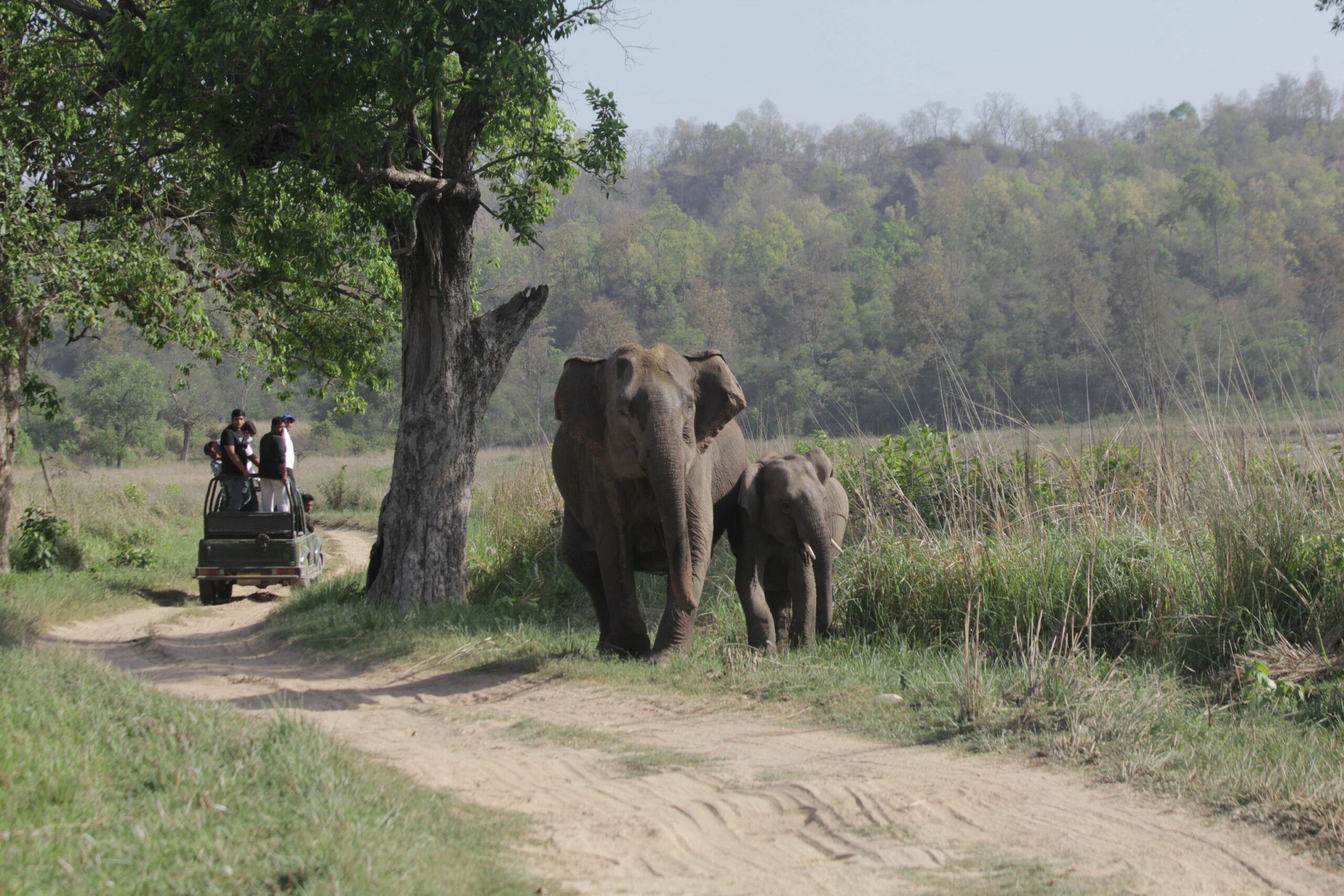
Jhilmil is an important elephant movement corridor. Herds of 10–20+ elephants commonly seen crossing open grassland and wetland margins on seasonal migration routes.

Leopards are resident in the riverine forest sections of Jhilmil. Sightings occur on the forest edge where grassland meets woodland — prime ambush habitat.
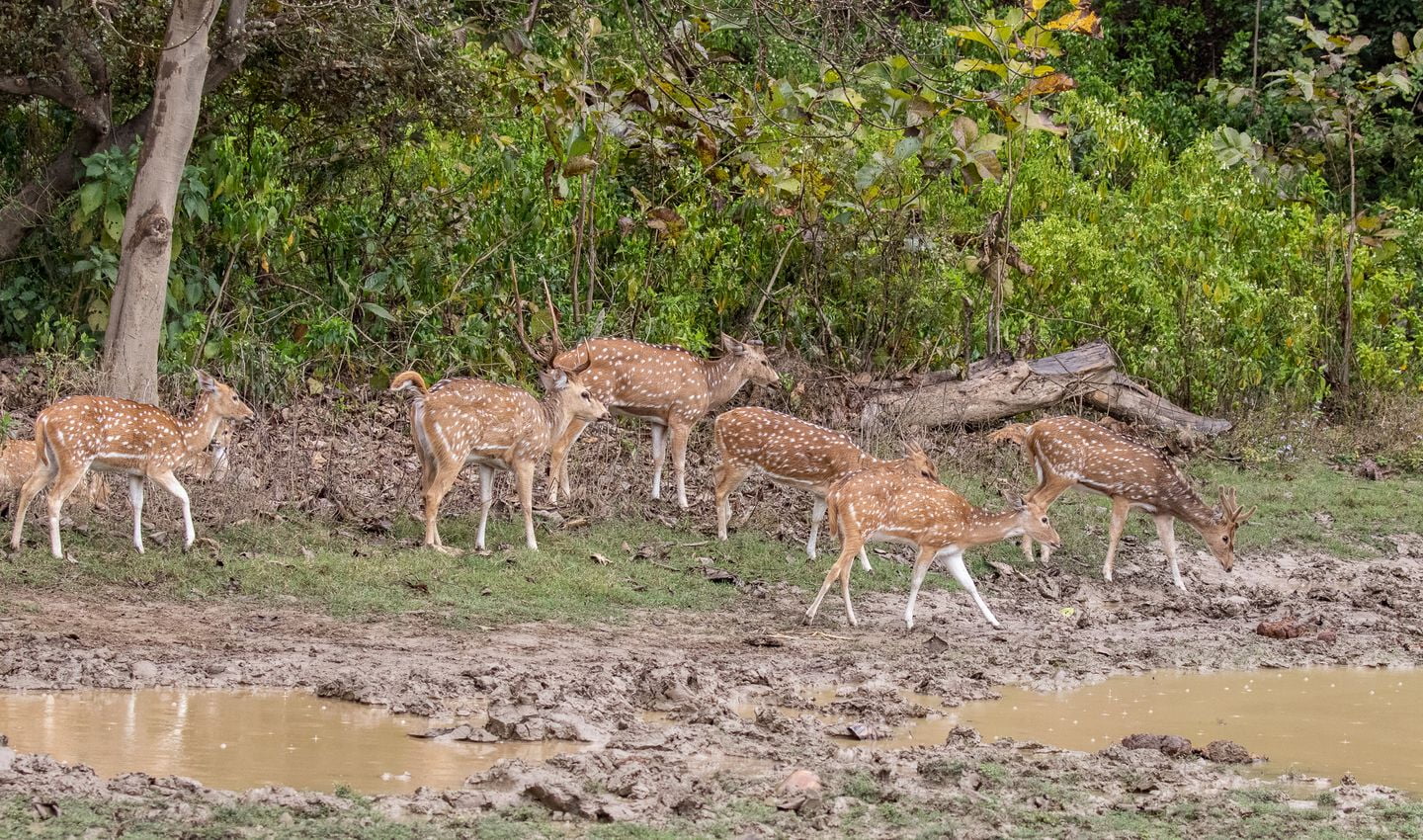
Large herds of spotted deer (chital) and sambar reliably seen in open grassland sections. Wild boar, barking deer, langur and nilgai consistently present.
Bird Watching at Jhilmil Jheel — North India’s Best Kept Secret
If you are a serious bird watcher, bird watching Jhilmil Jheel belongs on your list alongside Bharatpur and Chilika. The wetland sits at the intersection of three habitat types — Terai grassland, seasonal wetland, and deciduous riverine forest — delivering grassland specialists, waterbirds, and forest birds in one 25 km safari circuit.
Commonly seen in the canopy of riverine forest sections. Among the most spectacular resident birds in the Rajaji landscape.
Major winter visitor in flocks of 50–200 birds. Among the world’s highest-flying migratory birds — arriving from high-altitude Tibetan breeding grounds.
Large numbers on open water areas in winter. Striking orange-brown plumage makes it unmistakable. Arrives from Central Asian steppe breeding grounds.
Spectacular winter visitor seen near water. Among the most sought-after sightings for serious birders at Jhilmil in December–January.
Resident raptor frequently seen soaring over grassland edges and calling with its distinctive loud whistle. Commonly seen from the safari vehicle.
Painted Stork and Asian Openbill visit the wetland margins seasonally. Sarus Crane occasional in open grassland sections — rare and memorable sighting.
A dedicated birder in January can realistically list 80–100 species in a single Jhilmil morning safari — a remarkable count for any single site in North India.
Crocodile Safari at Jhilmil Jheel
One of Jhilmil’s most underrated highlights is the crocodile safari Jhilmil experience. The river bank crocodile point within the reserve is one of the most accessible and reliable locations to observe Mugger Crocodiles at close range in North India.
In winter (November–March), crocodiles bask extensively on river banks in morning sun — making them highly visible and photographable from the safari vehicle. On the same morning safari, you can observe Barasingha in the grassland, migratory waterfowl on the open water, and crocodiles on the river bank. Three completely different and equally compelling wildlife experiences in one 2.5-hour circuit — available nowhere else near Haridwar at this price point.
Best Time for Jhilmil Jheel Safari — Month by Month
Season opening. Jhilmil opens 2 weeks before all other Rajaji zones. First migratory birds begin arriving. Barasingha herds visible. Lush green wetland after monsoon. 18–28°C.
Best month overall. Migratory bird numbers peak — 110+ species simultaneously. Barasingha antlers fully developed. Crocodile basking daily. 5–18°C. Book 3–5 days ahead.
Peak bird activity. 80–100 species in a single morning safari. Barasingha stags most photogenic. Elephant herds on corridor route. 3–16°C — warm jacket essential.
Comfortable and productive. Migratory birds still present in good numbers. Barasingha calving begins. Comfortable temperatures 8–24°C. Best for families. Walk-in booking usually OK.
Migratory birds departing. Resident species very active. Grassland fresh green after early spring rain. Elephant corridor activity increases. 15–32°C.
All other Rajaji zones close June 15. Jhilmil alone stays open until June 30. Tiger and elephant activity near water. Zero crowds. Morning safari only in May–June.
How to Reach Jhilmil Jheel from Haridwar
| From | Distance | Travel Time | Route |
|---|---|---|---|
| Haridwar city | 20 km | 35 min | Haridwar–Najibabad Road (Kotdwar direction) — gate on left side |
| Rishikesh | 38 km | 55 min | Via Haridwar → Najibabad Road |
| Delhi | 260 km | 5.5–6 hours | NH-58 to Haridwar → Najibabad Road |
| Jolly Grant Airport | 52 km | 70 min | Airport → Haridwar → Najibabad Road |
| Dehradun | 65 km | 80 min | Dehradun–Haridwar highway → Najibabad Road |
By taxi from Haridwar: ₹400–₹500 | By auto-rickshaw from Haridwar: Available to highway junction. We arrange hotel pickup from Haridwar and Rishikesh — call +91-93687-57005.
Jhilmil Safari Price 2026 — Complete Breakdown
Jeep (Gypsy) ₹3,000 Per vehicle (max 6 persons) | Entry Fee ₹150 Per person (Indian) | Guide Charges ₹500 Per safari (mandatory) |
Jhilmil Jheel vs Chilla Zone — Which to Choose?
| Factor | Jhilmil Jheel | Chilla Zone |
|---|---|---|
| Distance from Haridwar | 20 km (35 min) | 12 km (20 min) |
| Ecosystem | Wetland + Open Grassland | Dense Sal Forest + Ganga Canal |
| Star Wildlife | Barasingha, Birds, Crocodile | Tiger, Elephant, Gharial |
| Bird Watching | ⭐ Best in Rajaji (300+ species) | Good (riverine species) |
| Barasingha (Swamp Deer) | ✅ Only zone in Uttarakhand | ❌ Not found here |
| Tiger Sighting | Occasional | ⭐ Highest in Rajaji |
| Season Length | Oct 15 – Jun 30 (longest) | Nov 15 – Jun 15 |
| Advance Booking Needed | 3–5 days (peak) | 2–3 weeks (peak) |
| Crowd Level | Low to moderate | High in peak season |
| Best For | Bird watchers, Barasingha, Unique wetland experience | First-time visitors, Tiger seekers |
Best 2-day combination: Chilla morning (Day 1) + Jhilmil morning (Day 2) — the tiger reserve forest safari AND the wetland conservation reserve experience — the full spectrum of Rajaji’s wildlife in one trip.
What to Carry for Jhilmil Safari
- ✓Binoculars (8×42 — strongly recommended) for bird identification and Barasingha at distance. Not optional at Jhilmil.
- ✓Camera with 300–500mm zoom — for migratory birds, Barasingha and crocodile photography
- ✓Field guide to Indian birds — bird diversity makes identification a core part of the Jhilmil experience
- ✓Neutral clothing — khaki, olive, grey, brown. Wetland birds flush easily from bright colours
- ✓Heavy fleece or down jacket (November–February) — Jhilmil’s open wetland terrain feels colder than forested zones at dawn
- ✓Water bottle — 1.5 litres minimum; 2+ litres in April–June
- ✓Government-issued photo ID — original required, photocopies not accepted
Explore More
- Book Jhilmil Jheel Safari Online — Rajaji National Park
- Explore All 7 Safari Zones — Chilla, Ranipur, Motichur & More
- Ranipur Safari Zone — Leopard & Himalayan Goral Guide
- Best Time to Visit Rajaji — Month by Month Safari Guide
- Jungle Safari Near Haridwar — Complete Day Trip Guide
- Rajaji National Park Rules & Safari Guidelines 2026
Frequently Asked Questions — Jhilmil Jheel Safari
Book Your Jhilmil Jheel Safari Now
Uttarakhand’s only Swamp Deer habitat. 300+ bird species. Crocodile safari. Open October 15 – June 30. ₹3,000/jeep, expert guide included.
📞 +91-93687-57005 | Available 7 AM – 9 PM